
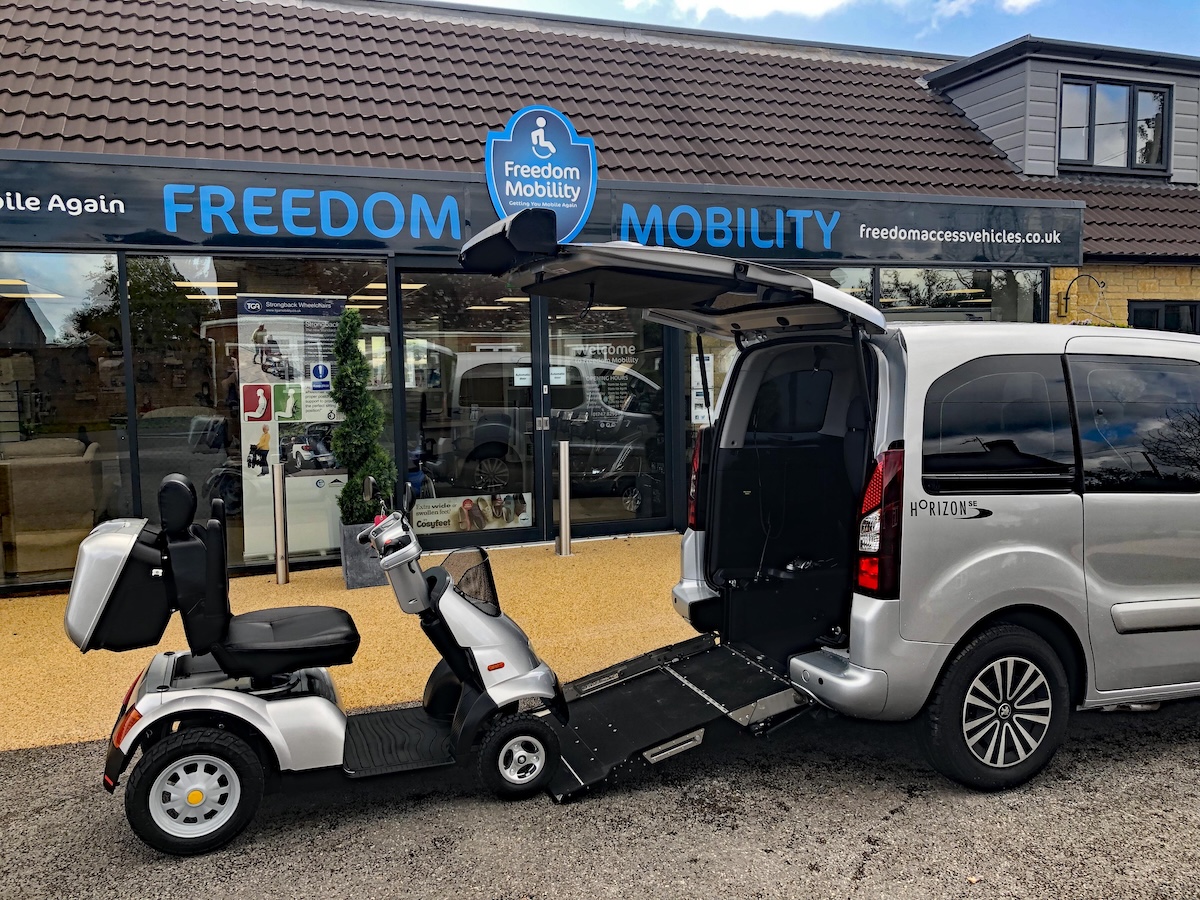
Signs it’s time for a wheelchair-accessible vehicle (WAV)
A wheelchair accessible vehicle (WAV) offers a different level of freedom. Instead of fitting mobility around the car, the car is designed around the person. At some point, this becomes the smarter, safer and more comfortable option.
For many people with mobility needs, adapting an existing car is often the first step. Hand controls, swivel seats, boot hoists and transfer aids can transform day-to-day travel and keep life moving without significant changes. But as time goes on, needs evolve. What once worked comfortably can start to feel restrictive, and simple journeys may demand more effort, organisation or physical strain than they used to.
Knowing when to make that switch isn’t always obvious. It can creep up gradually or become clear after a single stressful or unsafe moment. Below are the key signs that it may be time to move from an adapted car to a full WAV, along with the ways a WAV can remove hassle and safeguard independence in the long term.
1. Transferring in and out of the car is becoming difficult or unsafe
For many families, this is the first noticeable turning point. A transfer that once took a moment now feels awkward, slow, or tiring. In some cases, it becomes risky.
Typical early signs include:
- Needing two people to assist with a transfer when one used to be enough.
- Extra time spent positioning feet, hips or shoulders comfortably.
- Sliding, lifting or twisting that causes discomfort.
- A fear of falling when stepping up or down.
- Transfers are becoming unpredictable on uneven ground or in bad weather.
- Family members are reporting increasing strain from helping.
Swivel seats and transfer aids can help for a while, but they rely on the person being able to stand, pivot or partially weight-bear. If these abilities change, a WAV allows direct wheelchair access with no transfers. The wheelchair rolls in, locks in place and remains in the seating position for the journey. For many, this alone transforms safety and comfort.
2. Boot hoists and portable ramps are becoming too heavy or time-consuming
Hoists and ramps suit people who can transfer the wheelchair and fold it before loading. But they can become impractical as conditions change.
Signals that a WAV would make life easier include:
- The person using the wheelchair now requires a larger or heavier chair.
- Electric wheelchairs that are too heavy for a standard boot hoist.
- A hoist is struggling to lift the chair to the correct height.
- Needing two people to guide the chair into the boot.
- Repeated fiddling with straps, joints or batteries before loading.
- Family members find hoists or ramps increasingly strenuous.
A WAV removes all this effort. The wheelchair is driven in through a built-in ramp, secured once inside, and travels safely in the rear or alongside the driver, depending on the WAV layout. No lifting. No bending. No dismantling.
3. The current car doesn’t offer enough headroom, legroom or interior space
As wheelchairs become larger, as medical needs develop, or as the person grows (in the case of children), interior space becomes an issue. Even well-adapted cars were never built with wheelchairs in mind, so space will always be limited.
Signs of space restrictions include:
- Low rooflines cause the person to duck or tilt their head.
- Knees touching the dashboard or the seat in front.
- Difficulty turning the wheelchair once inside the cabin.
- Limited room for carers or relatives to sit comfortably.
- No space for medical equipment or bags without cluttering the cabin.
- Feeling “wedged in” rather than comfortably positioned.
A WAV provides a level floor, a higher roofline, and purpose-designed wheelchair travel space. Many also offer flexible seating layouts that allow additional passengers to travel comfortably without compromising wheelchair access.
4. Journeys are becoming stressful, rushed or overly complicated
Transporting someone in a wheelchair can become a task with many steps. What used to be a quick run to the shops may now involve:
- Preparing the wheelchair for loading.
- Checking the hoist or ramp.
- Managing the transfer carefully.
- Packing mobility equipment in a specific order.
- Allowing far more time than you used to.
You may also notice:
- Avoiding specific trips because they feel “too much”.
- Worrying about where to park to allow for transfers.
- Feeling stressed when the weather is poor.
- Planning routes around car parks rather than destinations.
These are major flags. A WAV simplifies all of this. The wheelchair user enters the vehicle easily, remains in their chair and exits with the same freedom. Parking becomes less restrictive, and uncertainty disappears.
5. Increasing fatigue, discomfort or pain during car journeys
When someone spends more time in their wheelchair day-to-day, changing to a standard car seat can become uncomfortable. Posture may be different, support may be poor, and the act of transferring itself can cause fatigue before the journey even starts.
Indications of discomfort include:
- Needing prolonged repositioning once inside the car.
- Complaints of pressure on the hips, spine or shoulders.
- A drop in energy levels before the journey has even begun.
- Stiffness after short or medium journeys.
- Increased back or joint pain linked to car travel.
Staying in the wheelchair solves this issue. Most wheelchairs are set up precisely for personal comfort, postural support and pressure management. Travelling while seated in the wheelchair can significantly reduce pain and fatigue and make journeys noticeably smoother.
6. Carers are feeling the strain
This is one of the most important signs families often overlook. As physical needs increase, carers are frequently expected to do more lifting, guiding, stabilising, and positioning. Even simple tasks can carry a long-term risk of back, shoulder or knee injury.
Key indicators:
- Carers use poor posture when assisting with transfers.
- Reports of aches after lifting or adjusting equipment.
- Extra time is needed to manage movements safely.
- Friends or relatives needing help, even for short journeys.
- A sense that every outing requires physical effort.
A WAV removes almost all manual handling. Wheelchairs roll in using a lightweight ramp or an electric lift. Securing systems are purpose-designed, quick and safe to use. For carers, this can be life-changing.
7. The wheelchair user wants greater independence, autonomy or confidence
A WAV is not only about physical practicality. It can restore a level of autonomy that adapted cars can’t always offer.
Emotional indicators that it may be time for a WAV include:
- The person is expressing frustration at waiting for help to transfer.
- Wanting the ability to head out spontaneously.
- Preferring to stay in the wheelchair to feel secure or in control.
- Wanting to travel more comfortably with their usual seating, controls or supports.
- A desire to sit closer to the driver or talk more easily during travel.
- A general sense that daily journeys feel harder than they should.
Many WAV layouts allow wheelchair users to travel in front, next to the driver, or even drive from their wheelchairs in specialist conversions. That sense of being included, connected and independent can transform confidence and quality of life.
8. The wheelchair itself has changed
Wheelchairs evolve over time. The original chair may have been light, compact and easy to manage. As needs change, heavier or more specialised chairs often become necessary.
Signs the chair has outgrown the car include:
- A new powerchair that doesn’t fit into the boot or hoist.
- Larger wheelbases make manual loading harder.
- Chairs with tilt-in-space or specialised seating that can’t be folded.
- Chairs with medical equipment attached that must stay upright.
- Extras such as headrests, lateral supports or tray tables that won’t stow easily.
A WAV is built for modern wheelchairs. Whether it’s a compact attendant-propelled chair or a large, powered model with complex seating, the accessible vehicle keeps the chair intact at all times.
9. Mobility needs are expected to change further
Families often consider a WAV too late. They wait until a transfer becomes unsafe or the wheelchair physically won’t fit. But usually, the best time to make the move is before the struggle begins.
Reasons to plan ahead include:
- A progressive condition where transfers will become more difficult.
- Anticipated growth in children who rely on a wheelchair.
- Increasing medical needs that require more space.
- A shift to a larger or more supportive wheelchair.
- The desire to future-proof the vehicle for several years.
Choosing a WAV early avoids repeated costs, stress and last-minute decisions. It also means you can take time to select a layout that suits both present and future needs.
10. You’re choosing destinations based on ease, not enjoyment
When people begin ruling out certain trips because the transfer would be difficult, the parking unpredictable, or the loading time too long, the vehicle is already limiting their lives.
Typical signs include:
- Cancelling days out if the car park has tight spaces.
- Avoiding historic towns or scenic places because access is difficult.
- Choosing shorter trips than the person really wants.
- Taking fewer spontaneous outings.
- Relying more on taxis or accessible transport services.
A WAV opens options again. With easier loading, safe wheelchair travel and straightforward parking, families can focus on where they want to go rather than how they’ll get there.
11. The current vehicle feels cramped for passengers
Even when the wheelchair user is comfortable, other passengers may not be. Adapted cars sometimes require seats to be folded or removed, leaving relatives squeezed into a limited space. Over time, this affects comfort and practicality.
Signs include:
- Rear passengers have restricted legroom.
- Seats in odd positions due to hoists or equipment.
- Difficulty fitting shopping or luggage.
- Feeling that every journey requires a compromise.
WAV layouts are flexible. Many offer seating for five or more passengers while still allowing full wheelchair access. Everyone travels comfortably, and no one feels pushed to the side.
12. Loading and unloading take longer than the journey itself
When the admin of travelling becomes bigger than the trip, it’s time to reassess.
Examples:
- Spending ten minutes preparing the wheelchair and hoist.
- Repeating the process every time you stop.
- Needing to time outings around fatigue or mobility fluctuations.
- Feeling relieved when you return home because the loading process is over.
A WAV simplifies everything to a single, smooth motion. The ramp or lift deploys quickly, the wheelchair rolls in and secures easily, and you’re ready to travel in moments.
13. The person feels more secure in their wheelchair than in a standard car seat
Even with adaptations, some people never feel entirely stable in a standard seat. This may be due to posture, muscle tone, or the need for specialist supports that the car seat can’t provide.
Signs include:
- Leaning, sliding or slumping in the car seat.
- Difficulty keeping a symmetrical posture.
- Needing extra cushions or straps to feel safe.
- Medical professionals recommend better postural support.
Travelling in a wheelchair solves this. It preserves carefully set angles and supports, reduces the risk of pressure issues and provides a familiar, secure seating position for the person throughout the journey.
14. Your lifestyle has outgrown a standard car
Sometimes the change isn’t about the wheelchair user at all. It’s about family life, travel habits or day-to-day logistics.
For example:
- Regular hospital or therapy appointments that require space for equipment.
- Long journeys where comfort matters more.
- Family hobbies that already require a roomier vehicle.
- Dogs, luggage or specialist chairs that take up precious boot space.
A WAV often doubles as a practical family car with adaptable, spacious seating and a generous cabin layout.
Why WAVs make life easier for families and wheelchair users
Moving to a WAV often feels like a fresh start. Instead of adapting life around the car, the vehicle finally fits the person and the family.
Key benefits include:
- Safer journeys with minimal manual handling.
- Faster loading and unloading.
- A comfortable, familiar seating position.
- Space for equipment, luggage and passengers.
- Reduced strain for carers and relatives.
- Greater independence for the wheelchair user.
- Freedom to travel more widely and spontaneously.
For many families, the first journey in a WAV is a moment of realisation: this is how it should have been all along.
Accessible vehicle summary
There’s no single rule that dictates when it’s time to move from an adapted car to a WAV. For some, it becomes clear within months. For others, the tipping point arrives gently over time. What matters most is recognising the signs early and choosing a vehicle that supports safety, comfort and independence long into the future.
For families in Dorset, Wiltshire, Hampshire, and Somerset, Freedom Mobility in Ludwell is a leading WAV supplier, and we are ideally placed to offer advice, demonstrations and guidance on the right WAV for your needs. A conversation often helps clarify the next step, and a short test ride can make the difference between coping and truly living comfortably.
As wheelchair-accessible vehicle specialists, with vehicles from Ford, Peugeot, Volkswagen, etc., we offer a free home demonstration that shows the difference wheelchair-accessible cars can make to the wheelchair user and their family, and we can offer generous part-exchange allowances on the car you currently own.