


Seating and comfort layout choices in Wheelchair Accessible Vehicles
Why seating in accessible vehicles matters more than you think
Most buyers start with access (ramp/lift) and wheelchair space. That’s essential, but comfort and layout determine whether the vehicle works for:
- Family life (school run, weekends away, everyone facing the right way)
- Carer support (space to assist safely, easy transfers, minimal strain)
- Independent travel (visibility, controls, heating, storage within reach)
- Long journeys (posture, ride quality, headroom, legroom, noise)
- Changing needs over time (new chair, growing children, reduced mobility)
A great layout reduces stress. A poor layout can turn every trip into a compromise.
In wheelchair accessible vehicles, the wheelchair user may travel:
1. In the wheelchair (secured with restraints), or
2. Transferred into a vehicle seat (wheelchair stowed elsewhere)
If travelling in the wheelchair (most common) Comfort depends on more than size. Ask:
- Can the wheelchair user sit in a natural, upright position without twisting?
- Is there enough headroom for taller users or a powered electric wheelchair?
- Can they see out of the side windows (important for travel sickness and enjoyment)?
- Is there effective heating/airflow to that position?
- Is the ride comfortable, or does the rear position feel bouncy on uneven roads?
If transferring to a seat
You’ll care more about:
- Transfer space (can a carer stand close, can you use a transfer board/hoist?)
- Seat height and firmness (too low can make standing difficult)
- Door opening and grab handles (safe entry/exit)
- Where the wheelchair is stored (and whether lifting is realistic)
Common car seat configurations and who they suit
1) Wheelchair behind driver/passenger with a second row (integrated layout)
What it feels like: The wheelchair user sits in a position similar to other passengers rather than being isolated at the back.
Best for:
- People who want easy conversation and inclusion
- Anxiety-sensitive passengers who prefer being near the front
- Longer trips where visibility and ventilation matter
Check before buying:
- Can the wheelchair user see out clearly?
- Is there enough shoulder/arm clearance when seated?
- Is the wheelchair user’s position far enough from airbags and safe zones?
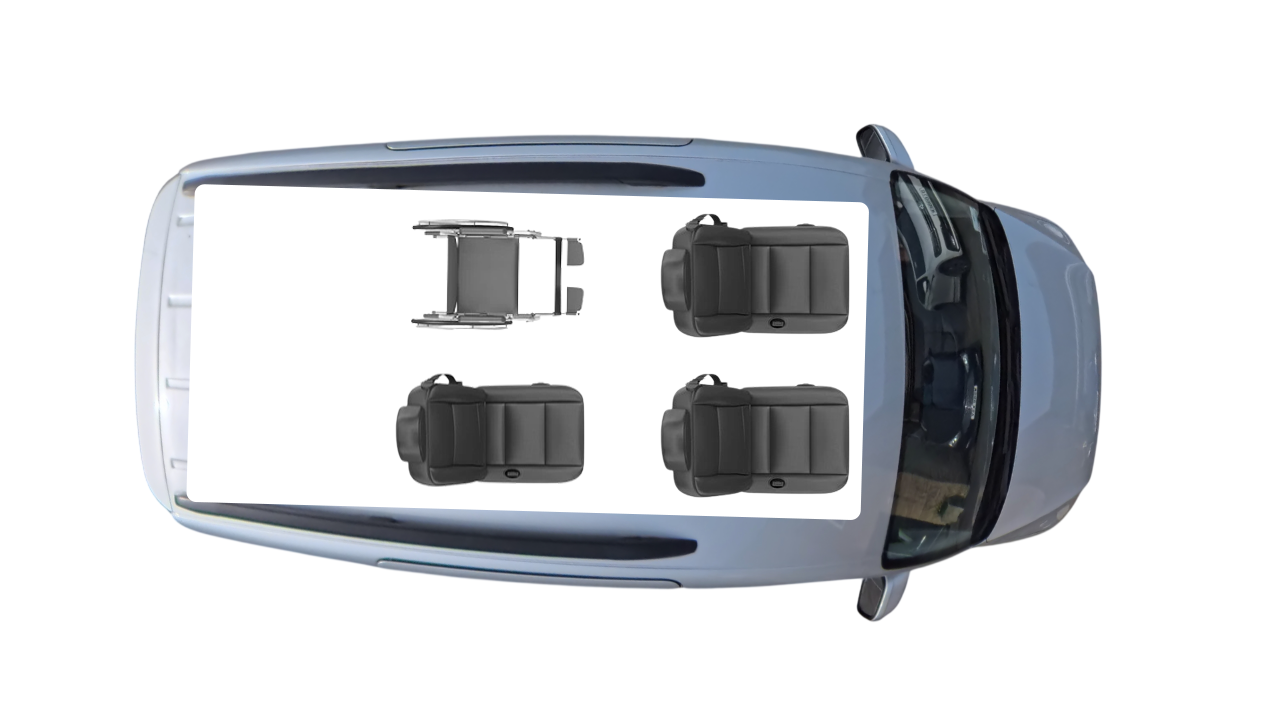

What it feels like: Flexible and practical. Seats can be moved to create space when needed.
Best for:
- Families where passenger numbers change day to day
- Users who sometimes travel with the wheelchair and sometimes transfer
- Anyone who needs multi-purpose practicality
Check before buying:
- How heavy are removable seats? (Some are awkward to lift/store)
- Do the seat rails and fittings interfere with the wheelchair footprint?
- Is there secure storage for removed seats when not in use?
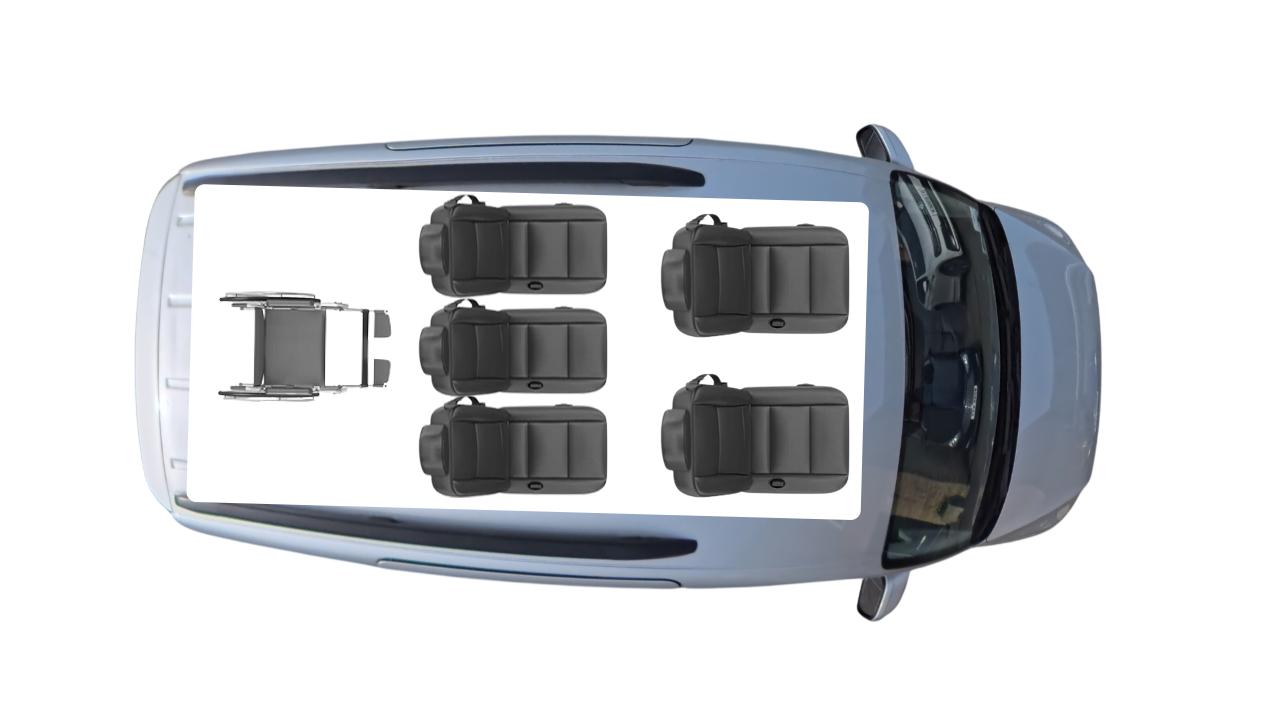
What it feels like: Great for carrying more people, but the wheelchair user can feel separate.
Best for:
- Family transport where the priority is maximum passenger seating
- Shorter, frequent trips (school run, appointments)
Check before buying:
- Does the wheelchair user have enough leg/foot clearance on the ramp angle?
- Is the rear suspension comfortable with the load?
- Can a carer easily reach the wheelchair user if needed?
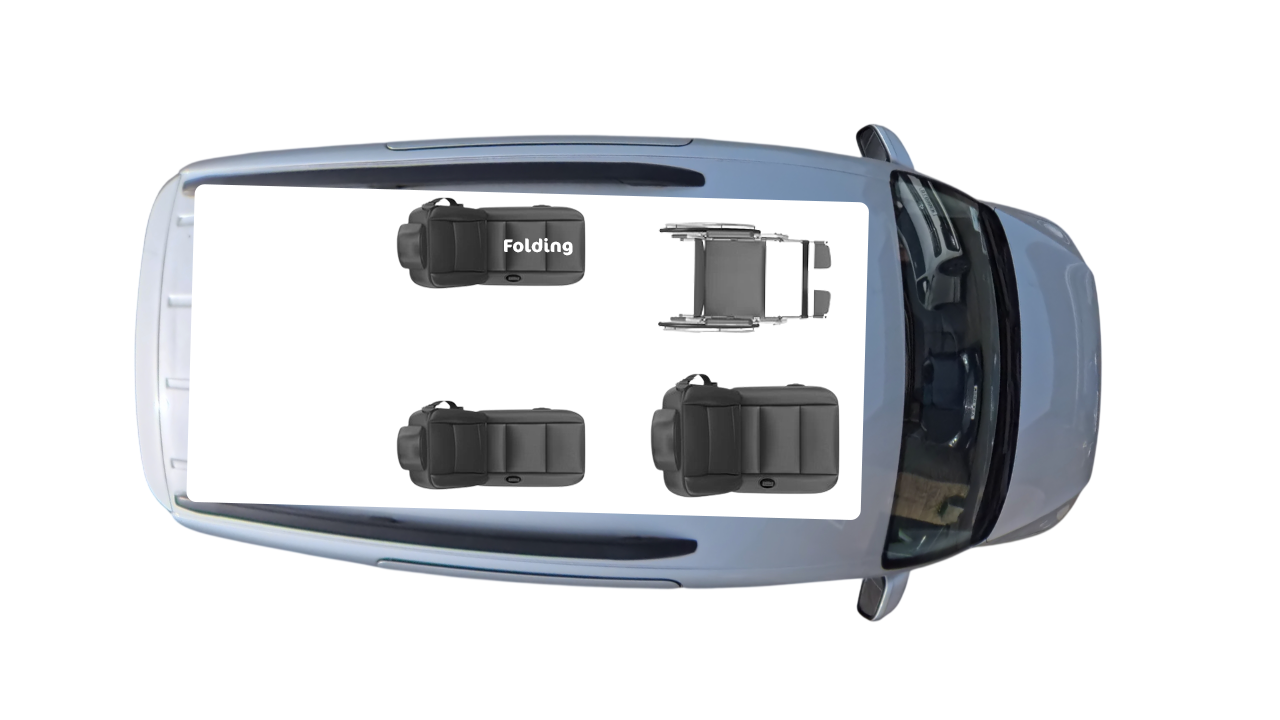
What it feels like: A popular configuration because it allows the wheelchair user to have a much better view while travelling.
Best for:
- Wheelchair users who only travel with one other person (the driver)
- Wheelchair users who prefer travelling in the front of the vehicle
Check before buying:
- Upfront WAVs can be slightly more rattly than more standard conversions, do you mind that?
Comfort factors that matter on real journeys
A layout can “fit” but still be uncomfortable. These details make a big difference in a wheelchair accessible car :
Ride comfort and suspension feel
Wheelchair positions towards the rear can feel more movement over bumps. Consider:
- How the vehicle behaves fully loaded (chair + passengers + kit)
- Whether the conversion includes suspension changes
- Tyre choices and pressures (comfort vs economy)
Ramp angle and smoothness
Steeper ramps can mean:
- Increased effort for carers pushing
- Increased strain for powerchair motors
- Greater risk of grounding or footplate snagging
Look for:
- A long enough ramp for a gentler angle
- A non-slip surface
- Side edges for safety
- Easy, controlled opening/closing
Heating, ventilation and “hot/cold spots”
Wheelchair users can be more sensitive to temperature. Check:
- Rear vents reach the wheelchair space
- Windows can be opened safely/comfortably
- Air conditioning actually benefits the rear area, not just the front
Lighting and visibility
Comfort includes feeling secure:
- Clear sight lines out of windows
- Good interior lighting for evening travel
- Minimal glare and reflections in the wheelchair position
Noise and vibration
Rear seating zones can be noisier. Consider:
- Road noise at motorway speeds
- Rattles from seats/rails when not in use
- Secure stowage to prevent kit shifting
Safety and comfort go together: securement and seating posture
Comfortable travel relies on correct securement.
- The wheelchair should sit square unless the conversion is designed for an angled fit.
- There should be enough space to position the wheelchair without forcing it into an awkward angle.
- Seatbelts should sit properly across the body (not twisted or rubbing the neck).
- Headrests and lateral supports matter for some users, especially on longer drives.
Picking the best layout for different real-life needs
For families with children
Look for:
- Flexible middle-row seating (tip-and-fold/removable)
- A wheelchair position that keeps the family together (side-entry may help)
- Storage for school bags without blocking access
Avoid:
- Layouts where every extra passenger forces a seat removal
For regular carer-assisted travel
Look for:
- Space to stand beside the wheelchair position
- Easy-to-reach anchor points and restraints
- A layout that reduces bending/twisting when helping
Avoid:
- Tight rear areas where carers must lean awkwardly to secure belts or adjust posture
For independent wheelchair users (where possible):
Look for:
- Straightforward entry and a clear path to the wheelchair area
- Simple controls (ramp/lift operation that’s manageable)
- Good visibility and comfort in the chosen wheelchair position
Avoid:
- Complicated seat removal routines or heavy components you can’t manage alone
For long-distance touring
Look for:
- Central wheelchair positioning for ride comfort (often side-entry)
- Strong climate control to the rear
- Space for cushions, blankets, charging cables, snacks, and a medical kit
Avoid:
- Steep ramps and cramped wheelchair spaces that make posture tiring
For powered wheelchairs and larger chairs
Look for:
- Extra width/length clearance and turning room
- Higher roof/headroom if needed
- Securing points that suit a heavier chairAvoid:
- Anything that requires scraping footplates or squeezing through narrow apertures
Test-drive checklist: how to judge a seating layout in 15 minutes
When viewing Wheelchair Accessible Vehicles, don’t just “see if it fits”. Do this:
1. Load/unload twice (you’ll spot what’s annoying on the second attempt).
2. Check whether the wheelchair user can sit square and relaxed.
3. Confirm you can secure restraints without contortions.
4. Sit in every passenger seat and check legroom and access.
5. Check airflow: Turn the heating on and see if the wheelchair space benefits.
6. Look for practical storage that doesn’t block the wheelchair ramp or aisle.
7. Ask: “How will this work in the rain, in a tight car park, and on a rushed day?”
The best seating configuration is the one that matches your life
There isn’t a universal best layout. The right choice depends on who travels, how often, and what the wheelchair user needs to feel comfortable and included.
If you’re comparing wheelchair accessible vehicles, focus on:
- Wheelchair position (integrated vs rear)
- Seating flexibility (fixed vs removable/tip-and-fold)
- Assistance needs (space for carers, easy securement)
- Long-journey comfort (ride, visibility, temperature)
The correct layout makes the vehicle feel natural, easy, and genuinely enjoyable to use, rather than something you have to work around.
Freedom Access Vehicles – your WAV specialists
Choosing the right seating and comfort layout in a wheelchair-accessible vehicle can make the difference between a vehicle that “works” and one that genuinely enhances everyday life. The ideal configuration depends on how you travel, who travels with you, and the level of assistance required. Whether you prioritise an integrated wheelchair position, flexible seating, easy carer access, or long-journey comfort, the key is to select a layout that suits both practical needs and real-world comfort.
As a leading WAV supplier, Freedom Access Vehicles has experience matching customers with the most suitable wheelchair-accessible vehicles based on individual requirements, mobility equipment, and lifestyle.
Our vehicles include:
- Volkswagen Caddy Maxi
- Ford Tourneo Connect
- Ford Grande Tourneo Connect
- Peugeot Partner
- Citroen Berlingo
- Mercedes Vito
- Fiat Doblo
- Renault Kangoo
We take the time to understand your needs, arrange demonstrations, and ensure that any chosen layout is safe, comfortable, and future-proof. With a wide range of WAVs for sale and free home demonstrations, it’s easy to find the perfect wheelchair vehicle to suit your mobility needs. Get in touch today for a no-pressure approach to wheelchair accessible vehicles.

ADDRESS
‘The Old Wagonworks’ Ludwell Nr. Shaftesbury Dorset SP7 9HH